
2023 IEP Designee – West Virginia University
Since its beginning in 1867, West Virginia University has never lost sight of its public, land-grant mission. Originally created as the Agricultural College of West Virginia, the institution’s purpose has continually evolved through the years, with WVU currently committed to advancing education, healthcare and prosperity not only for West Virginians but citizens of the world.
We are meeting our commitment as a modern, land-grant university through very high research activity (WVU is a Carnegie, R1 institution), a fruitful academic portfolio, and extensive service and outreach.
Applying for the Association of Public and Land Grant Universities’ Innovation and Economic Prosperity (IEP) designation reinforced those promises and opened our eyes to the measurable impacts centered around talent, innovation, place, community development, and economic engagement. The process also presented us with a pathway on how to embolden our mission as a land-grant university.
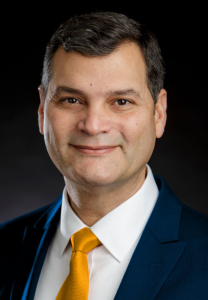
A cross-collaborative effort by a team of 18 faculty, staff, and students from various departments drove WVU to achieve this designation. The core team included Jorge Atiles, dean of Extension and Engagement; Melanie Page, associate vice president for creative and scholarly activity in the Research Office; Priscila Santos, director of the West Virginia Grant Resource Centers, WVU Office; and Elizabeth Vitullo, assistant vice president, economic innovation at WVU.

Through the assessment, the team identified three key accomplishments by WVU:
- Enhancing education by developing a qualified workforce to match future economic growth and innovation in the state,
- Increasing access to health care for all West Virginians through the development of a network of qualified providers, world-class facilities, and cutting-edge research,
- Harnessing institutional activities towards prosperity for all — defining prosperity very broadly — from financial security to mental and physical health to being hopeful and living a meaningful life.
Partnerships and programs highlighted in our report include a collaboration with the Coalfield Development Corporation as part of the “Build Back Better Regional Challenge.” This project takes thousands of acres of abandoned mining land in West Virginia and aims to transform those sites to new uses with solar, wind, or geothermal generation, energy storage, agro-forestry, healthy food production, eco-tourism, and outdoor recreation.
Meanwhile, our Center for Excellence in STEM Education enhances STEM education through professional development for educators, cutting-edge programs and opportunities for K-12 students, and external partnerships with tech companies.

On the health side, WVU houses the West Virginia Clinical and Translational Science Institute (WVCTSI), an academic hub and catalyst for clinical and translational research targeting priority areas including addiction and resulting emerging epidemics (i.e., hepatitis C), cancer, cardiovascular disease and chronic lung disease. WVCTSI has established partnerships with clinics across the state and has developed opportunities to find real health solutions for West Virginians.
Before beginning our self-assessment, the core IEP team worked with the Office of the Provost to launch a centralized website informing the community and external stakeholders about the IEP process and ways to engage in the process.
Working groups were formed to engage in various aspects of the self-assessment and designation processes, including developing an inventory of programs and projects that aligned with IEP’s definition of economic engagement, collecting data, administering surveys, and conducting focus groups with internal and external stakeholders.
We identified areas for growth and opportunity in two ways: direct stakeholder engagement with surveys and focus groups and through the IEP application.

The process helped point out WVU’s decentralization challenge, which affects our approach to economic engagement. While individuals and units do excellent work, – they often do not know about each other or the work they are doing. We have taken steps to change this. One example is the Build Back Better project (mentioned earlier) that involved entities across campus.
Also, we highlighted the economic impact of WVU to the state — $1.4 billion a year. In addition, we have a global reach. WVU has faculty conducting research and teaching in 76 countries across six continents. This cross-cultural sharing of ideas, technology, and innovation allows for advancement in fields such as healthcare, engineering, agriculture, and sustainable development.
As a land-grant institution, WVU works to share institutional messages, build meaningful connections, and engage diverse audiences through extensive outreach networks. WVU Extension has 55 county offices with faculty and staff working to harness the resources of the state to support community and economic development efforts through 4-H and youth development, agriculture, and family and community development programming. Extension’s Center for Community Engagement works to facilitate community-engaged learning through scholarships and service opportunities.

At WVU, each day holds new promises and new opportunities to make a difference. As WVU President Gordon Gee said, “I am so proud of our faculty, staff, and students whose sustained and excellent work to bring needed and valued solutions to real-life problems within the pillars of education, health care, prosperity, and purpose has led to this distinction among our peers.”
The WVU IEP team also included Hannah Bailey, Kimberly Becker, Katie Farmer, Anne Jones, Joshua Meadows, Zachary Morris, Erienne Olesh, Melissa Olfert, Lauren Prinzo, David Satterfield, Denis Scott, Nathan Sorber, Jack Thompson, and Kristi Wood-Turner.
- IEP
Stay Connected
X (formerly Twitter)
Facebook
YouTube
LinkedIn
RSS