
University of Nebraska-Lincoln earns extension of APLU’s Innovation and Economic Prosperity designation
Based in Lincoln, the capital of Nebraska, the University of Nebraska-Lincoln (UNL) was chartered as a land-grant university on February 15, 1869. A member of the Big Ten Conference, the Big Ten Academic Alliance, and the Association of Public and Land-grant Universities, UNL holds the Carnegie R1: Doctoral Universities—Highest Research Activity classification. UNL received its initial APLU Innovation and Economic Prosperity (IEP) designation in 2015 and received a five-year extension of the designation in 2024. In January of 2024 UNL received a community engagement classification from the Carnegie Foundation. UNL is accredited by the Higher Learning Commission and was one of the first institutions west of the Mississippi River to award doctoral degrees—the first being granted in 1896.
The role of UNL as the state’s primary intellectual and cultural resource is fulfilled through its three missions: teaching, research, and service. UNL’s land-grant tradition ensures a commitment to the state’s unique character and its people. The university’s state-wide mission and responsibility to serve the needs of all Nebraskans reaches all of the state’s ninety-three counties, rural and urban communities alike. And UNL’s engagement, entrepreneurship, innovation, and academic work reaches and positively impacts regional, national, and international contexts.
UNL’s initial IEP designation self-study and proposal development process provided campus leadership important baseline and status data on engagement and collaboration, stakeholder feedback, example framework for dynamic situational awareness, and suggested areas of improvement. The IEP Designation reinforced leadership’s aspirations to achieve sustained positive, impact for Nebraska through inclusive engagement, strategic innovation, and equitable economic participation; reinforced by the simple concept that “every person and every interaction matters”. Then Chancellor Ronnie Green initiated a strategic planning process in 2019, with the N150 Commission that guided the development of UNL’s comprehensive strategic plan, the N2025 Plan.
N2025 specifically identified engagement among the six aims of N2025, and articulated IEP themes in additional aims, to “Innovate the student experience”, “increase the impact of research and creative activity”, and “solve challenges critical to Nebraska and world”. To formalize this commitment, in 2021 Kathleen Lodl was hired to lead UNL’s fourteen-month documentation and proposal development process in pursuit of the Carnegie Engaged Campus designation. UNL’s adoption of the Carnegie Community Engagement definition assisted UNL people and units across units and the state’s 93 counties to recognize their engagement contributions, articulate their impact, identify areas for growth and improvement, reward those who are doing well, and ultimately enhance UNL’s engagement capacity. UNL earned the designation in January 2024. This process and its artifacts were instructive and provided excellent perspective and data from internal and external stakeholders on UNL’s engagement enterprise, successes, and challenges which informed our IEP Designation extension work and proposal in 2023-24.
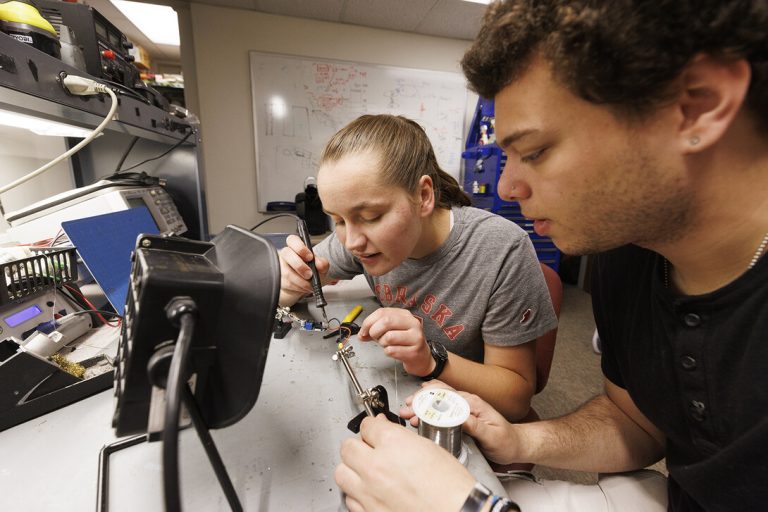
UNL and its innovation partners have successfully leveraged their agricultural and manufacturing expertise to likewise chart a path for technology-based economic development and diversification for the state by focusing on development of an ag-tech ecosystem, broad robotics emphasis, and a makers’ movement, anchored by Nebraska Innovation Studio at Nebraska Innovation Campus (NIC) with satellite collaborators geographically dispersed across Nebraska. Invest Nebraska has been a key partner in related successes, including establishing The Combine ag-tech accelerator at NIC; founding and funding the Heartland Robotics Cluster via the Economic Development Administration’s Build Back Better program with UNL as its largest program partner; and working with BIO Nebraska and UNL to establish the Biotech Connector wet-lab incubator, also at NIC. Invest Nebraska and UNL have leveraged these successes to help the state and other economic development actors coordinate convening and responses to regional funding opportunities requiring ecosystem-level cooperation and participation for success, e.g. EDA Tech Hubs.
UNL has benefited from its participation in the IEP community over the nine years of its involvement and has likewise contributed to it, through IEP award and designation reviews, summit participation, and mutual sharing of successful practices and programs. Connections with the IEP community enables UNL to learn about novel approaches and programs, and to share the successes of UNL programs and activities that positively impact economic prosperity in Nebraska and beyond.
One member of UNL 2024 designation extension review team said, “It is common knowledge that partnerships move at the speed of trust, and UNL demonstrated the importance of this approach in implementing its stakeholder engagement strategy.”
Another praised Nebraska for being responsive to changes in its regional economic climate.
“The IEP champions [at Nebraska] demonstrated their capacity to be agile while galvanizing all stakeholders to identify problems and strategize to implement solutions.”
Monthly meetings with key regional organizations including, but not limited to, the Nebraska Department of Economic Development, Lincoln Partnership for Economic Development, Greater Omaha Chamber of Commerce, BIO Nebraska, Invest Nebraska, Nebraska Business Development Center, UNeMED, and others, involved in tech-based economic development, entrepreneurship, and STEAM workforce development across Nebraska has become a critical feature of UNL’s IEP-related engagement strategy over the past five years.
It took several years of consistent communication and meeting to build trust among the representatives of the informal group members, utilizing Chatham House Rules at ninety minute monthly meetings, to achieve the open conversations, sharing, and coordination we now enjoy across more than fifteen organizations serving and representing constituencies in our regional ecosystem across industry, higher education, government, municipalities/municipal groups, trade organizations, and formally-administered innovation districts, e.g. Nebraska Innovation Campus. By way of membership, constituency, and client/customer relationships, this network-of-networks group reaches hundreds of organizations, companies, and municipalities, and can likewise convey their needs, challenges, interests and questions.
This group is now an invaluable regional resource and has proven to be an effective forum to align priorities, discuss and act on opportunities for collaboration, conduct dynamic ecosystem(s)-level resource and gap analysis, and actively support planning and execution of one-another’s events, programs, and other activities. This collaboration also supports the pillar of UNL’s improvement plan that involves telling our story, as each of the participating organizations actively carry ecosystem and regionally relevant messaging of UNL, NIC, and NU IEP activities, accomplishments, plans, and most importantly, impact.
- Commission on Economic & Community Engagement
- IEP
Stay Connected
X (formerly Twitter)
Facebook
YouTube
LinkedIn
RSS