

2025 IEP Designee – James Madison University
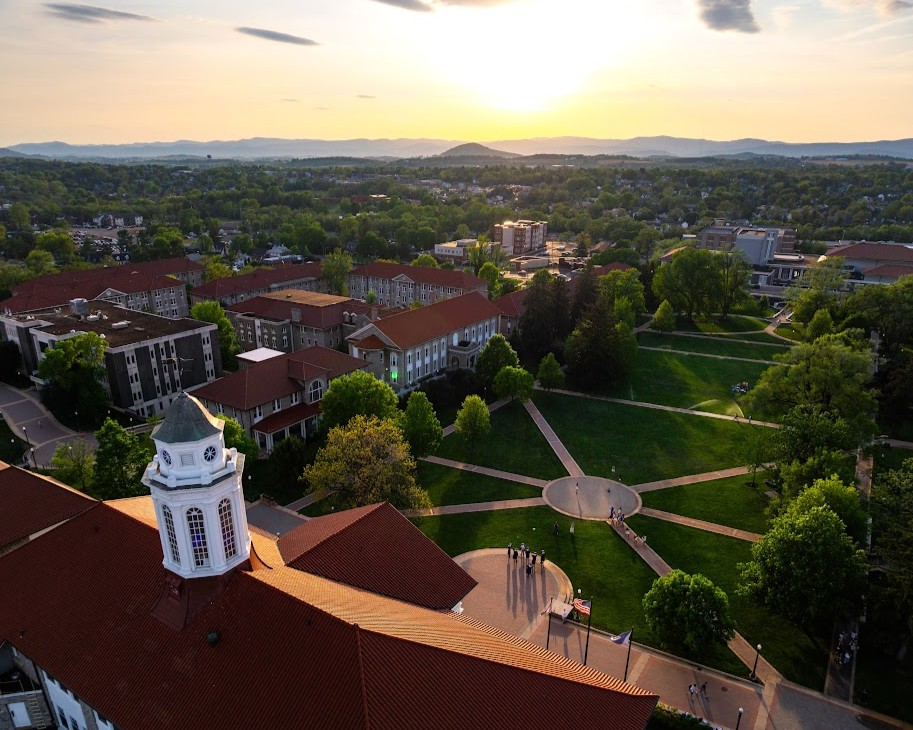
From its start in 1908 as the State Normal and Industrial School for Women to its designation as a high research university as classified by the Carnegie Commission, James Madison University has continually evolved and innovated over its more than 115-year history, modeling its tagline – Being the Change.
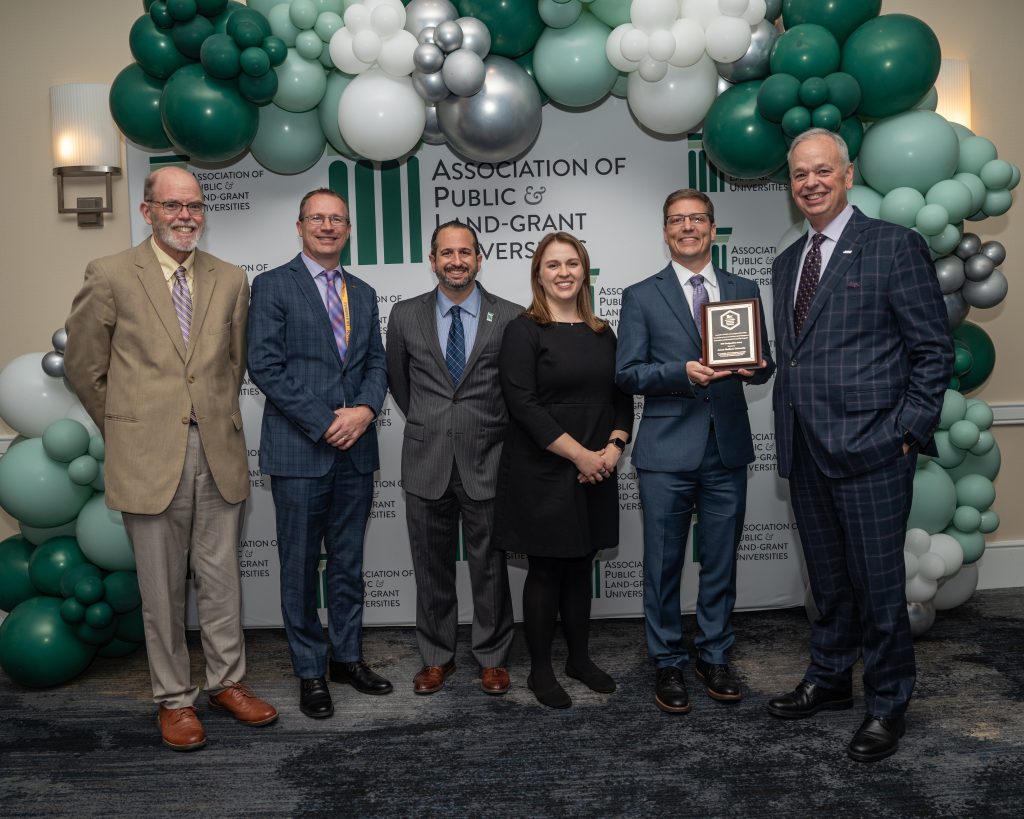
As JMU has risen as a research institution, community anchor and economic driver in the region, the designation in November 2025 as an Innovation and Economic Prosperity University from APLU showcases this commitment to economic growth and vitality.
The self-study portion of the APLU IEP certification process came at a pivotal moment as it coincided with the creation of the Office of Economic & Community Development within the Division of Research, Economic Development and Innovation. Through a year-long, rigorous self-assessment process, JMU OECD staff and the University Economic Development Council (UEDC) engaged hundreds of faculty, staff, students, and external partners from academic department chairs to local business owners to assess existing initiatives and chart new opportunities for impact.
From this process, the JMU IEP team identified three areas of accomplishment:
- Developing Educated and Enlightened Citizens: JMU excels in fulfilling its mission to create educated and enlightened citizens who lead productive and meaningful lives. JMU alumni consistently report strong career outcomes and overall well-being. Employers tell the university that alumni are collaborative problem-solvers ready for work.
- Fostering a Culture of Creativity, Innovation and Entrepreneurship: JMU fosters a culture of creativity, innovation, and entrepreneurial thinking among faculty and students. The teacher-scholar model — the bedrock of academic programs — integrates teaching and research to promote faculty development and student learning. JMU’s strategic plan emphasizes creativity, innovation, and entrepreneurship. It was reclassified as an R2 Doctoral Universities: High Research Activity in 2022, thanks in part to the growing reputation and success of its academic programs, research, scholarship, and creative activities.
- Strengthening Communities: JMU contributes to the economic and social development of communities through engagement, support, and outreach. Partnerships address civic, health, social, educational, and cultural needs throughout the region, Commonwealth, and globe. Further, JMU’s spending and workforce development practices boost economic vitality in the region and Commonwealth. JMU has held the Carnegie Commission’s Community Engagement classification since 2010, demonstrating long-term commitment to its vision to be the national model of the engaged university.
Examples that showcase these strengths include:
Civic engagement initiatives advance the legacy of James Madison by preparing students to be responsible participants in a representative democracy. The Madison Center for Civic Engagement (JMU Civic) is a campus hub for promoting civic participation and democratic engagement. JMU consistently ranks in the top 10% of universities in voter registration and turnout rates and is recognized for its culture of civic engagement.
JMU X-Labs is an innovation hub that fosters high-impact learning and research experiences through transdisciplinary projects that address real-world problems. Through the award-winning Reimagined Internship program, students engage with an industry partner in an immersive design-thinking prep course and subsequent paid summer internship.
The College of Education’s (CoE) partnerships strengthen schools and the education workforce. In addition to placing teacher education students in local schools, CoE provides technical aid and professional development to educators via multiple grant-funded programs. Additionally, CoE opened Virginia’s first “Lab School” in fall of 2024, a partnership with Blue Ridge Community College and Rockingham County Public Schools. It is designed to cultivate innovation, problem-solving skills, and provide career exposure among area high-school students.
Using feedback gathered during self-study, the JMU IEP team also determined opportunities for growth that we organized into three categories: communicating effectively and strengthening internal supports; boosting the regional economy; and expanding industry-aligned research and economic development projects. To address these opportunities, some of the objectives currently underway include:
- Revamping JMU’s ‘digital front door’ for the local community and promoting the Office of Economic & Community Development as a navigator and connector between economic development, business, and community stakeholders and the university.
- Activating the JMU Collabratory space in the Harrisonburg Innovation Hub, serving to deepen engagement with the community’s entrepreneurial and business ecosystem.
- Increasing research impact by redesigning JMU’s Research to Impact (tech transfer) program, streamlining intellectual property and innovation management, educating stakeholders about IP and innovation policies, and connecting students and faculty to the external innovation ecosystem.
As we look ahead, we will continue to seek opportunities that allow us to increase economic engagement and community impact, building upon our university’s strong foundation with an eye to the future. As JMU’s recently appointed seventh President, Dr. James C. Schmidt said in his opening address to the university, “Why not JMU?”
Authors:
Nora Sutton, Economic Development Specialist, Office of Research, Economic Development and Innovation
Bekka Harsh, Marketing Manager, Office of Economic and Community Development
- Commission on Economic & Community Engagement
- IEP
Stay Connected
X (formerly Twitter)
Facebook
YouTube
LinkedIn
RSS