
CIMA has created our Member Spotlight to highlight our members and institutions across the country. Read below to see our spotlight from each newsletter! If you have any interesting uses of data or stories you’d like to share in our Member Spotlight, please reach out to data@aplu.org.

What three words best describe your university? “Dreams” because we have a significant population of first-generation students and a diverse student body, many of whom are realizing their dreams by being the first in their family to earn a college degree and go on to successful employment or further study. “Engaged” refers to our longstanding community engagement. We recently earned the Carnegie Classification for Community Engagement, supported by extensive ongoing work both in and out of the classroom. And last, “compassion” reflects our faculty and staff’s deep commitment to student success. They make many of their decisions with the day-to-day welfare and career trajectory of the students in mind.
What are some interesting ways in which your institution is using data to make decisions? One notable initiative involves the collaboration between institutional research and our campus teaching and learning center, XCITE, where we created a dashboard to identify equity gaps in course grades across various student characteristics such as ethnicity, gender, low-income, and first-generation status. This data engaged faculty who participated in a voluntary course redesign effort to make classes more inclusive and resulted in over 50 faculty members completing the process and launching redesigned courses. In addition, we’ve analyzed the impact of supplemental instruction in STEM classes using a quasi-experimental method, finding significant positive impacts in some subjects and helping departments adjust their instructional strategies. Our long-term goal is to centralize participation data from academic support units for a comprehensive view of student experiences and outcomes.
CIMA members often discuss data governance, data literacy, data privacy, security, and ethics as challenges for cultivating a culture of data-informed decision-making. What do you think might be a unique challenge for cultivating this culture at an HSI/AANAPISI institution? A unique challenge is addressing the nuances of our diverse student population, such as providing detailed breakdowns of Asian American students by specific ethnicities beyond standard IPEDS categories, while also minding data quality and privacy, especially with small sample sizes. As a member of the Alliance of Hispanic Serving Research Universities (HSRU), I also see other institutions experiencing data-sharing challenges across states and regions with varying legal environments and data collection practices. This complicates efforts to analyze and increase Hispanic representation in graduate research programs and faculty positions, requiring us to navigate and harmonize these differences to achieve our goals.
What’s your favorite way to spend your free time? I love to travel. Each year, I try to visit a new destination. For example, last year I went to the Big Island of Hawaii, and the year before, I explored a historical mountain town in Brazil.
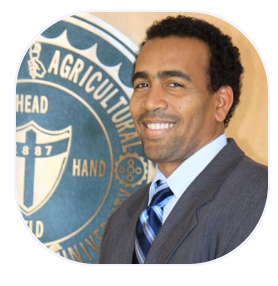
What three words best describe your university? Driven. We are driven to be successful. Not only were we interested in cracking the top 100 public Institutions of higher Education, which we have, we are also driven to become one of the best institutions in the world. Strategic. All the things that we do, whether academic or non-academic, are tied back to our strategic plan, which serves as a compass for all departmental and individual goals on campus and which we review consistently. Accountable. The strategic plan keeps us focused on the vision and mission and holds us accountable for what we set out to accomplish.
What are some interesting ways in which your institution is using data to make decisions? FAMU has earned the Excellence in Assessment designation through our use of data and assessment to understand the students’ needs, meet them where they are, and improve their educational experience. We continually assess whether we are providing quality education to our students. We also focus on our mission of providing access to historically disadvantaged students. Student affairs utilizes all types of data, including metrics related to participation in co-curricular activities, membership in student organizations, visits with academic advisors, grades, financial data (FAFSA) and incoming cohort academic profiles. Student Affairs and Academic Affairs also meet regularly to review assessments and outcomes, building comradery and breaking down siloes. This constant analysis is crucial for evaluating our effectiveness and aligning with the strategic plan.
CIMA members often discuss data governance, data literacy, data privacy/security/ethics as challenges for cultivating a culture of data-informed decision making. What do you think might be a unique challenge for cultivating this culture at HBCU institutions? The way that I look at it is that we are like all institutions, whether HBCU or more traditional institution. We’re always a work in progress and striving to be better at what we do. Data governance, data literacy, data privacy, and security ethics are challenges that I think all universities across the country face. Instead of looking at these as challenges, I prefer to use the term opportunities. It’s an opportunity for us to get better at what we do. By keeping these opportunities in the forefront, it allows us to maintain a culture of data informed decision making. This allows us to provide access for students, while ensuring that we provide the resources they need to be successful, not only here at the institution but once they graduate and pursue their lifelong goals.
What’s your favorite way to spend your free time? In my free time, the little that I have, I enjoy spending quality time with my family and watching my beloved New York Giants– even though we’re having a pretty horrendous year.
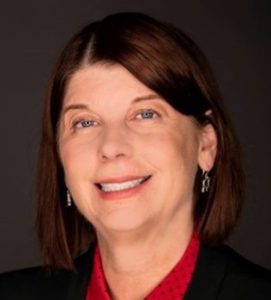
What three words best describe your university? Diverse, accessible, and affordable.
What makes your university great? Our university serves a majority of students who might not have another chance to have their talent matched with the opportunity provided by higher education. Most students are the first in their families to go to college and are from marginalized or low-income communities. The transformative impact is evident, as our students uplift themselves, their families, and their communities. At NIU, we’re constantly changing lives and making a meaningful impact, making it an exceptional place to work.
How long have you been involved with CIMA? Do you have a favorite memory of your involvement? I’ve been involved with CIMA since its inception, with a brief break after becoming a university president. All the CIMA meetings I’ve attended have been helpful to me in whatever role I was serving. My favorite memory would be the Portland CIMA summer meeting in 2016. We had a large constituency from NIU that really wanted to talk to other institutions about how they were using data, how they structured institutional research, institutional effectiveness, and accreditation. Everybody was so willing to have those discussions; talk about problems they had and hadn’t solved yet. Our whole team remembers that meeting as very collegial, informative, and fun.
Tell us about the last time you saw an interesting use of data, personally or professionally. The State of Illinois has a commission pioneering an adequacy-based funding formula for four-year universities that results in equitable distribution of state-appropriated funds. The Commission is grappling with approaches to fund universities adequately, equitably, and stably to best serve all students, including underrepresented students. Seeing people from across the country who work in the K-12 space, elected political leaders, analysts and modelers, and university leadership come together and put students at the center of conversations has been incredible. It’s not done, but it speaks to the power of data in driving decisions and actions.
What’s your favorite way to spend your free time? On the water of Lake Michigan. My husband and I spend almost every weekend on our boat, sometimes even working remotely! The water helps me think not about the everyday problems, but about the larger issues. It’s inspiring as well as relaxing.
Stay Connected
X (formerly Twitter)
Facebook
YouTube
LinkedIn
RSS