

Projects & Initiatives


Displaying 80 - 92 of 205
| Publication | Date | Description | Categories | Subcategories |
|---|---|---|---|---|

(pdf 584.52 Kb)
|
Aug 2016
|
ASU’s Downtown Phoenix campus represents a significant public partnership that has garnered community support and enhanced redevelopment opportunities. The partnership between ASU and the city of Phoenix has created jobs, increased public revenue and private investment, stimulated local businesses, improved social services, and most importantly, offered further educational opportunities.
|
Categories
|
Subcategories
|

(pdf 1014.02 Kb)
|
Aug 2016
|
CSU created the Energy Institute in 2013 to consolidate its vast energy research under one virtual organization, employing a unique interdisciplinary approach to global problem-solving. It was designed programmatically with an emphasis on agility and entrepreneurship to position CSU at the forefront of energy research and technology.
|
Categories
|
Subcategories
|
(pdf 599.58 Kb)
|
Aug 2016
|
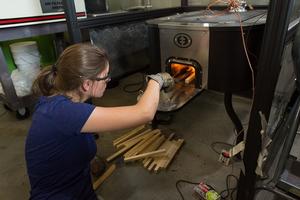
The most accomplished spin off of CSU’s Engines and Energy Conversion Laboratory (EECL), Envirofit International designs, manufactures, and sells clean cook stoves in developing nations. The global market leader with over 1M stoves sold in over 40 countries, EnviroFit is considered a pioneer in the social enterprise model, delivering cost savings and health benefits to 5 million people to date.
|
Categories
|
Subcategories
|
(pdf 645.12 Kb)
|
Aug 2016
|
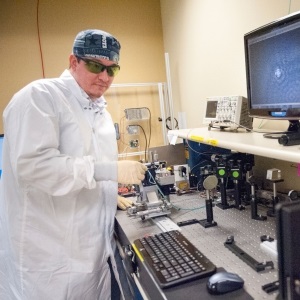
MSU’s Optical Technology Center (OpTeC) integrates two-year certificate programs, an undergraduate minor, graduate degree programs, private sector partnerships, and research and technology transfer to transform the high technology sector in Bozeman, Montana. The world-class research performed by OpTeC faculty has helped establish more than 30 optics related companies in Bozeman, fifteen of which were started by MSU graduates.
|
Categories
|
Subcategories
|

(pdf 654.21 Kb)
|
Nov 2015
|
AT CU-ICAR, TALENT IS PART OF AN ECONOMIC DEVELOPMENT ECOSYSTEM. CUICAR provides an example of a national best practice for public-private partnership focused on talent development aligned with industry research and education.1 The $250+ million innovation campus—founded in collaboration with Clemson University Foundation, BMW, Michelin, Timken, the state of SC and others—launched the first graduate program in automotive engineering (AuE) in the US in 2007 as a direct response to industry needs.
|
Categories
|
Subcategories
|

(pdf 278.92 Kb)
|
Nov 2015
|
Clemson merged career services and cooperative education to form the Clemson University Center for Career and Professional Development (CCPD) in July 2011. CCPD established an unusual structure, with staff reporting lines almost equally divided between Student Affairs and Academic Affairs. The intent was to stimulate more integrated and effective partnerships between employers, faculty and the staff in CCPD while also reducing costs.
|
Categories
|
Subcategories
|

(pdf 684.91 Kb)
|
Nov 2015
|
Although headquartered at Clemson, the primary focus of CUCWD is supporting technician education in 2-year colleges through digital learning tools, providing supportive resources for P-20 STEM engagement, and conducting research on the efficacy of digital learning in these contexts. Since its founding, CUCWD has- with local and national partners- successfully obtained over $53M of federal, foundation and private funding to support workforce development activities.
|
Categories
|
Subcategories
|

(pdf 437.89 Kb)
|
Nov 2015
|
In 2012, UMD partnered with BHEF and Northrop Grumman to create ACES (Advanced Cybersecurity Experience for Students). ACES includes the world’s first university dormitory for cybersecurity students, and is helping supply trained workers to serve the cyber community. The ACES program leverages the private and federal cyber security research cluster in Maryland and the region.
|
Categories
|
Subcategories
|

(pdf 309.51 Kb)
|
Nov 2015
|
As the nation’s first living-learning entrepreneurship program, Hinman CEOs is a groundbreaking initiative placing entrepreneurial-minded students from diverse disciplines into a unique community.
The two-year program is based within the A. James Clark School of Engineering.
|
Categories
|
Subcategories
|

(pdf 499.03 Kb)
|
Nov 2015
|
The I-Corps™ is a National Science Foundation initiative to increase the economic impact of research it has funded by training researchers to become entrepreneurs. NSF offers select researchers the opportunity to participate in a special, accelerated version of Stanford University’s Lean Launch Pad course. This revolutionary course engages participants in moving products out of the lab and into the market by talking to potential customers, partners and competitors.
|
Categories
|
Subcategories
|

(pdf 305.55 Kb)
|
Nov 2015
|
What the model represents is the complex and dynamic relationship between the entrepreneurial university, industry partners and government entities. The goal of this interconnected partnership
is to create an innovation ecosystem that thrives on combining the knowledge creation capabilities, of the entrepreneurial University, with the needs of private and non-profit partners, along with the policies, investments and oversight of government to support the regional economic ecosystem.
|
Categories
|
Subcategories
|

(pdf 316.24 Kb)
|
Nov 2015
|
The University works directly with many public institutions and community partners on economic development and workforce initiatives. State-based partners, such as the Minnesota Department of Employment and Economic Development, Life Science Alley, the Minnesota High Tech Association and Greater MSP are part of the University’s broader innovation network that is helping to grow the economy, address workforce needs and advance new technologies in key industries, such as Minnesota’s world-class medical device cluster.
|
Categories
|
Subcategories
|
Stay Connected
X (formerly Twitter)
Facebook
YouTube
LinkedIn
RSS