

Public universities were founded with the mission of advancing the public good – providing a life-changing education to students from ordinary backgrounds; undertaking pathbreaking research that saves lives, drives innovation, and enhances quality of life; and engaging their communities to tackle some of the most intractable challenges they face.
What Students Pay at Public Universities
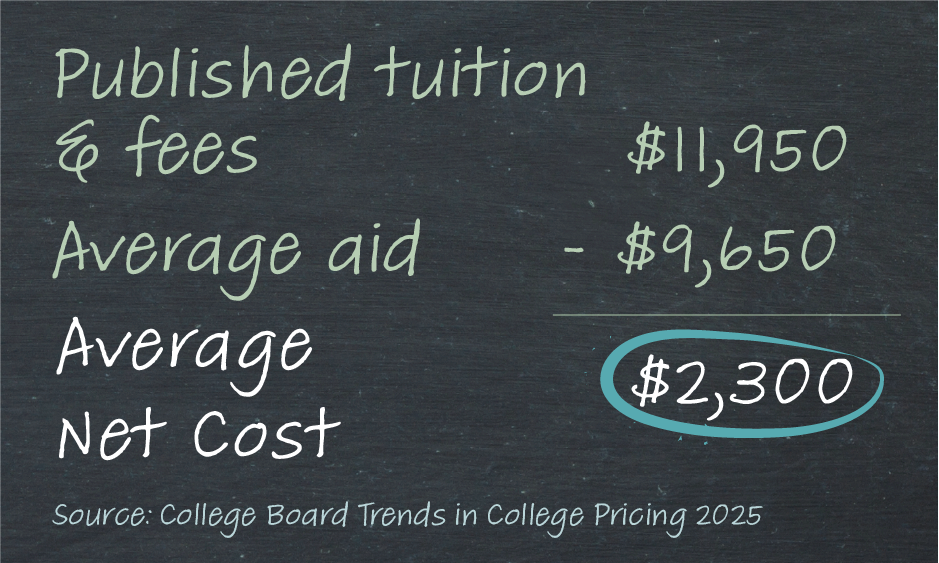
- Published in-state tuition and fees at public four-year universities average $11,950, lower than a decade ago after accounting for inflation.
- On average, in-state students at public four-year institutions pay just $2,300 in tuition and fees after scholarships, grants, and tax benefits. This net cost is nearly 50% lower than a decade ago after inflation.
- 2.4 million or more than one in three students at public universities receive Pell Grants, federal grants aimed at helping low-income students access college.
Public University Student Debt Facts

- More than four in ten students at public four-year universities complete their degree with zero debt.
- Nearly eight in ten students graduate with less than $30,000 in debt.
- Among those who do borrow, the average debt at graduation is $27,420 — or $6,855 for each year of a four-year degree at a public university.
- The share of bachelor’s recipients graduating with debt is down 10 percentage points from a decade ago.
Employment and Earnings For College Grads

- College graduates are half as likely to be unemployed as their peers who only have a high school degree.
- Typical earnings for bachelor’s degree holders are $40,500 or 86 percent higher than those whose highest degree is a high school diploma.
- 87% of bachelor’s degree holders report financial wellbeing, 20 percentage points higher than groups with any other level of education.
- College graduates on average make $1.2 million more over their lifetime.
How College Graduates Benefit Society

- Compared with individuals whose highest degree is a high school diploma, bachelor’s degree holders are 24 percent more likely to be employed, 3.5x less likely to impoverished, and nearly 5x less likely to be imprisoned.
- In all, lifetime government expenditures are $82,000 lower for college graduates than for those with high school degrees.
- Thanks to higher earnings, college graduates on average pay $273,000 more than a high school graduates over a lifetime
Public University Research and Community Engagement Benefits All
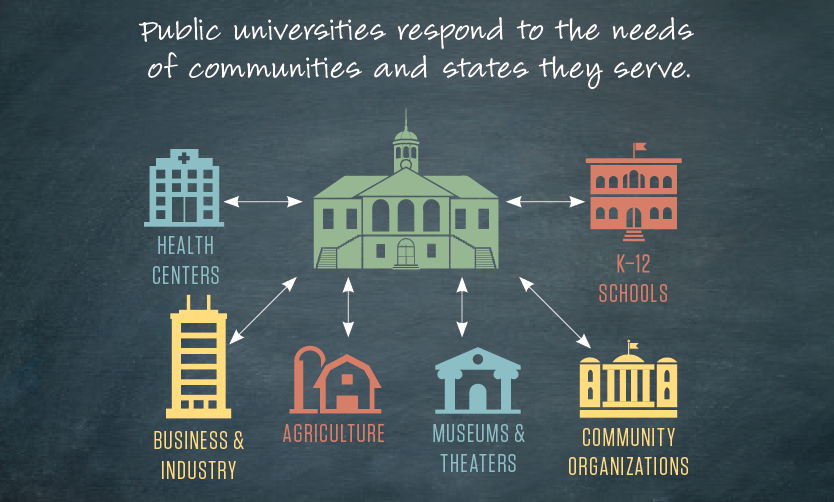
- Public research universities conduct two-thirds of university-based research and a large share of federally funded research. This research improves our collective understanding of the world around us, helps cure debilitating diseases, and fosters innovations that grow our economy.
- Public research universities played a central role in developing: touch screens and lithium-ion batteries that are used in smartphones, laptops, and electric vehicles; a variety of antibiotics used to treat diseases like tuberculosis; and breakthroughs in crop genetics that sowed the seeds of the Green Revolution, helping save a billion people from starvation globally.
Key Figures on Cost, Student Debt, & ROI at Public Universities

- Public universities provide the most affordable path to a life-changing college education.
- Public universities help students earn a bachelor’s degree with limited student debt.
- The typical college graduate sees an immediate and immense economic benefit from their degree – and the economic advantage compounds over their lifetime.
- The increased employment and earnings a college degree increases graduates’ financial wellbeing.
- College graduates contribute more in taxes and are less reliant on government assistance, creating substantial ROI for society at large.
Stay Connected
X (formerly Twitter)
Facebook
YouTube
LinkedIn
RSS